AQC vs GraphQL: Achieving GraphQL-Level Flexibility in Laravel Without GraphQL

Muhammad Raheel
March 26th, 2026 · 11 min read
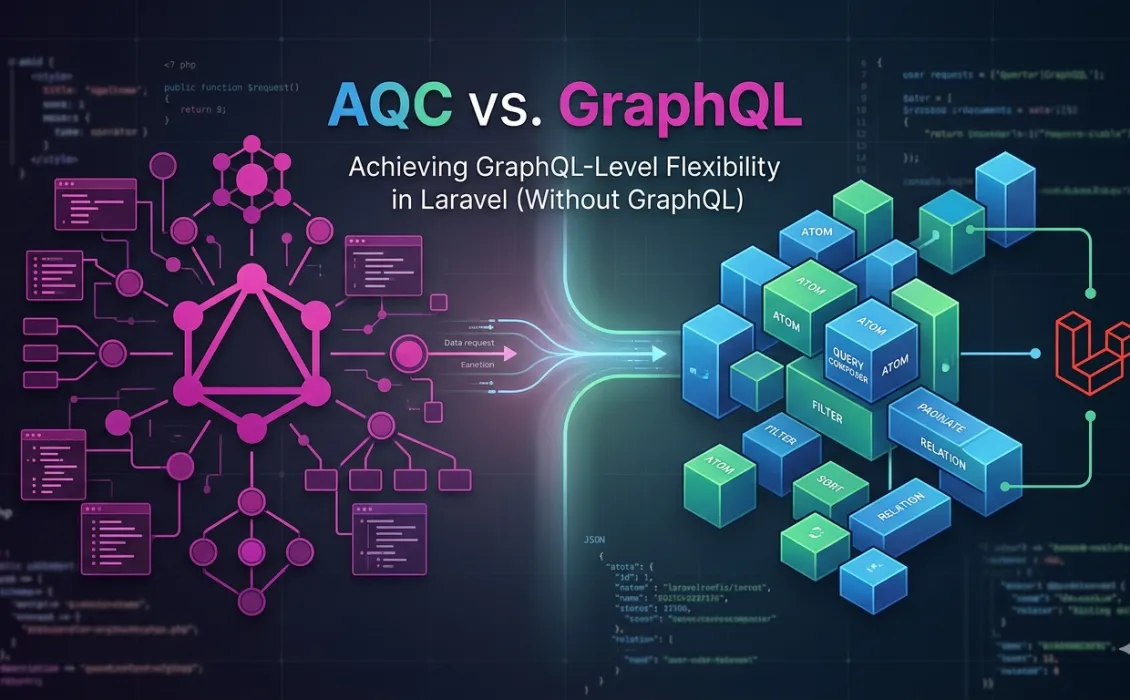
GraphQL is often presented as the ultimate solution for flexible and efficient data fetching.
It allows the frontend to request exactly what it needs, nothing more, nothing less. No over-fetching. No under-fetching. Complete control.
But there’s an assumption hidden inside that promise:
The frontend must be the one in control.
What if that assumption isn’t always necessary?
In many Laravel applications, the frontend is predictable, controlled, and tightly coupled with the backend. In such cases, introducing GraphQL may solve a problem that doesn’t truly exist.
This is where Atomic Query Construction (AQC) offers an alternative.
The Core Difference
At a high level, both approaches aim to solve the same problem:
Fetch precise data efficiently.
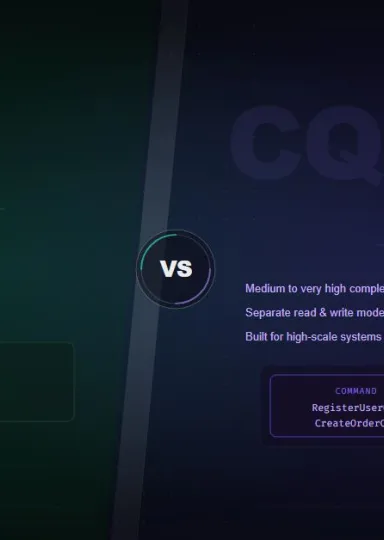
But they differ in who controls the shape of that data.
- GraphQL → Frontend defines the data shape at runtime
- AQC → Backend defines and controls the data shape
This difference drives everything else.
What GraphQL Actually Provides
GraphQL is not just about selecting fields.
It introduces a complete system:
- A query language
- A schema defining available data
- Resolvers to fetch and compute fields
- Runtime validation and introspection
Example:
{
    products {
        name
        price
    }
}
The backend parses this query and dynamically resolves only the requested fields.
This gives:
- Runtime flexibility
- Client-driven data fetching
- A standardized way to query data
What AQC Provides
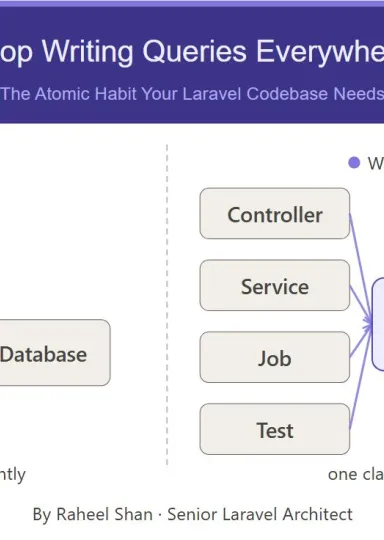
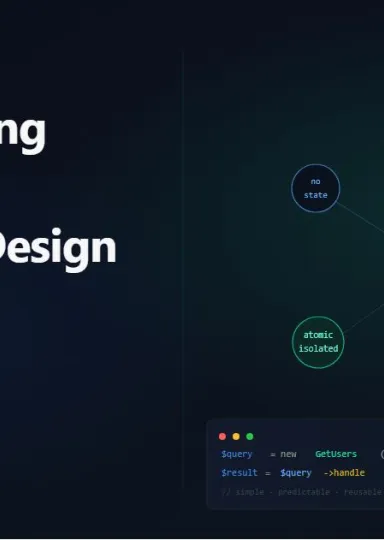
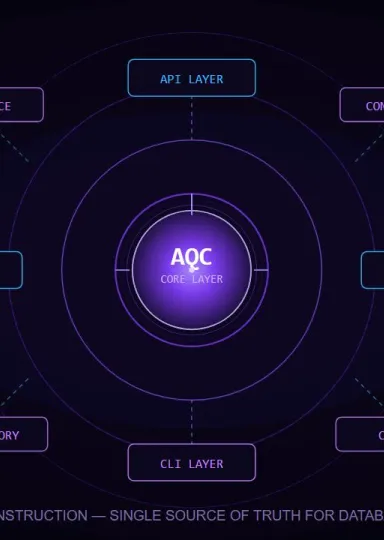
Atomic Query Construction organizes query logic into dedicated, reusable classes.
Instead of scattering queries across controllers and services, AQC centralizes them:
GetProducts::handle($filters, $columns);This ensures:
- Consistency across the application
- No duplication or drift
- Predictable query behavior
On top of AQC, developers often use DTOs (Data Transfer Objects) to define exact data shapes.
Precision: Both Can Achieve It
GraphQL is known for precision, but AQC can achieve the same outcome.
- Selecting only required columns
- Avoiding unnecessary data transfer
- Preventing accidental data exposure
With DTOs:
Product::select(ProductDTO::columns());With dynamic AQC:
Product::select($requestedColumns);Both approaches eliminate over-fetching.
The difference is not capability, but control.
Dynamic Field Selection (The Real Debate)
A common argument in favor of GraphQL is:
This is true.
However, the same behavior can be implemented with AQC.
Example Flow
- Backend provides available columns as metadata
- Frontend renders a selectable UI (e.g., table with column toggles)
- User selects desired fields
- Frontend sends selected columns back to backend
- AQC filters and returns only those fields
$columns = array_intersect(
    request()->input(
        'columns',
        []
    ),
    Product::allowedColumns()
);

Product::select($columns);
This achieves:
- Runtime flexibility
- Backend-controlled safety
- No additional query language
Schema: Explicit vs Implicit
GraphQL relies on an explicit schema:
- Defined using a dedicated language
- Enforced at runtime
- Discoverable via introspection
AQC-based systems rely on an implicit schema:
- Defined through models, metadata, and allowed fields
- Enforced through backend logic
- Exposed to frontend via API responses
Both approaches answer the same question:
“What data is allowed?”
They just do it differently.
Nested Relationships
GraphQL supports nested queries:
products {
    name
    category {
        name
    }
}
AQC can achieve the same using:
- Controlled eager loading
- Structured query composition
- Relationship-aware column selection
The difference is:
- GraphQL provides a built-in system
- AQC requires deliberate architectural design
Computed Fields
GraphQL uses resolvers:
priceWithTaxAQC uses:
- Model accessors
- Service-layer computations
Both require custom logic.
Neither has a real advantage here.
Validation and Safety
GraphQL enforces safety through schema validation.
AQC enforces safety through:
- Allowed column lists
- Model-driven exposure
- Controlled metadata
Example:
$columns = array_intersect($requested, Product::allowedColumns());This ensures:
- No unauthorized fields are exposed
- No sensitive data is leaked
Complexity
GraphQL introduces:
- A new query language
- Schema management
- Resolver layers
- Additional tooling
It becomes a system within your system.
AQC:
- Stays within Laravel
- Uses existing tools (Eloquent, classes)
- Avoids additional abstraction layers
When GraphQL Makes Sense
GraphQL is a strong choice when:
- Multiple independent clients consume the same API
- Data requirements are highly dynamic
- Frontend teams require full query control
- You need a standardized querying interface
When AQC Is Enough (or Better)
AQC is a strong choice when:
- Backend and frontend are controlled together
- Data requirements are mostly predictable
- You want strict consistency in queries
- You want to avoid query duplication and drift
- You prefer simplicity over additional layers
The Real Perspective
AQC does not eliminate the need for structure.
It shifts it.
- GraphQL → external, formal schema
- AQC → internal, code-driven schema
Both aim to solve the same problem.
They simply choose different trade-offs.
Final Thoughts
You do not always need GraphQL to achieve flexible and efficient data fetching.
With:
- Atomic Query Construction
- Model-driven field exposure
- Optional runtime column selection
You can replicate many of GraphQL’s core benefits without introducing a new query language or system.
GraphQL remains powerful and valuable.
But in many Laravel applications, its complexity outweighs its benefits.
In those cases, AQC offers a simpler, controlled, and equally effective alternative.